


Guangzhou Zhifan Chemical co.,ltd
Zhifan Chemical is a chemical industry trading company that has been providing chemical raw materials for more than 15 years. We have built a solid reputation for offering our customers worldwide top-notch products and first-rate customer support. Our in-depth understanding of the chemical industry enables us to find the best products and provide competitive pricing to satisfy the needs of our clients. In order to surpass our clients' expectations, we constantly work to improve our services and are dedicated to sustainable and ethical business practices. Zhifan Chemical is your reliable partner in the chemical industry.
Comprehensive comparison of advantages of factories,Control the source
Long-term cooperation guarantees supply chain
More advantageous prices, more complete services


who choose us?
Zhifan Chemical is a trading company in the chemical industry, with over 15 years of experience in supplying chemical raw materials. We have established a reputation for delivering high-quality products and providing excellent customer service to our clients all over the world. Our extensive knowledge of the chemical industry allows us to source the best products and offer competitive pricing to meet our customers' needs.
one-stop solution
professional team
high quality
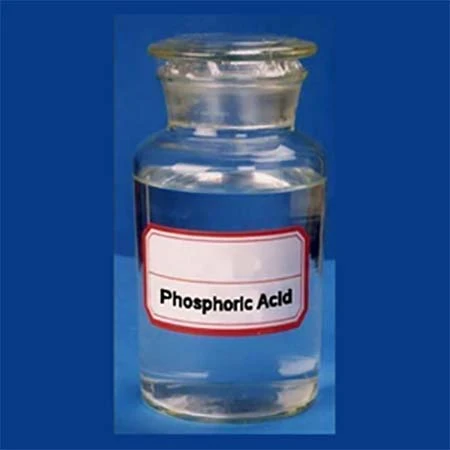
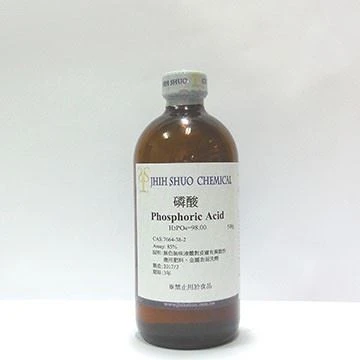
Phosphoric acid
is a common inorganic acid with a chemical formula of H3PO4 and a molecular weight of 97.995. Phosphoric acid is not easy to volatilize, not easy to decompose, and has almost no oxidizing properties. It has the general properties of an acid and is a ternary weak acid (some say it is a medium-strong acid). In addition to being used as a chemical reagent, phosphoric acid can also be used mainly in pharmaceuticals, rust converters, food additives, solvents, electrolytes, fertilizers, metallurgy, feed, etc. It also has uses in medical cosmetology and dentistry.
Product application scope

Phosphoric acid is easily deliquescent in the air, and when heated, it loses water to form pyrophosphoric acid, which further loses water to form metaphosphoric acid.
Silver nitrate and protein can be used to identify orthophosphoric acid, metaphosphoric acid, and pyrophosphoric acid. Silver nitrate can generate yellow silver phosphate precipitate with orthophosphoric acid, and generate white precipitate with pyrophosphoric acid and metaphosphoric acid, but metaphosphoric acid can precipitate protein.
Phosphoric acid is used as a raw material for the production of phosphates. Phosphates are added as pigments with special functions in the paint and pigment industry. They are added to paints as additives such as flame retardant, rust-proof, anti-corrosion, radiation-resistant, antibacterial, and luminescent.
Phosphoric acid is used as a food additive and has always been a concern for osteoporosis. Previous surveys used questionnaires to ask participants how often they drank cola and other carbonated beverages, and found that those who drank carbonated beverages were more likely to have osteoporosis.

After German businessman Polante discovered phosphorus and German chemist Kunkel produced phosphorus, British chemist Boyle also produced phosphorus independently. He was also the first chemist to study the properties and compounds of phosphorus. In his paper "A New Experiment on Observed Cold Light" published in 1682, he wrote that "phosphorus produces white smoke after burning, and the solution formed by the white smoke and water is acidic." The white smoke is phosphoric anhydride (phosphorus pentoxide), and the solution formed by the reaction with water is phosphoric acid, but he did not conduct further research on phosphoric acid.
The earliest chemist to study phosphoric acid was French chemist Lavoisier. In 1772, he conducted such an experiment: phosphorus was placed in a bell jar sealed with mercury to burn. The experimental results led to the following conclusions: a certain amount of phosphorus can burn in a certain volume of air; when phosphorus burns, white powder flakes of anhydrous phosphorus are produced, like fine snow; after burning, the air in the bottle is about 80% of the original volume; phosphorus is about 2.5 times heavier after burning than before burning; white flakes dissolve in water to form phosphoric acid. Lavoisier also proved that phosphoric acid can be produced by reacting concentrated nitric acid with phosphorus.
The earliest chemist to study phosphoric acid was the French chemist Lavoisier. In 1772, he conducted an experiment in which phosphorus was placed in a bell jar sealed with mercury and burned. The experimental results led to the following conclusions: a certain amount of phosphorus can burn in a certain volume of air; when phosphorus burns, white powder flakes of anhydrous phosphorus are generated, like fine snow; after burning, the air in the bottle is about 80% of its original volume; phosphorus is about 2.5 times heavier after burning than before burning; white flakes dissolve in water to form phosphoric acid. Lavoisier also proved that phosphoric acid can be made by reacting concentrated nitric acid with phosphorus.
About a hundred years later, German chemist Liebig conducted many agricultural chemistry experiments, revealing the value of phosphorus and phosphoric acid to plant life. In 1840, Liebig's "The Role of Organic Chemistry in Agriculture and Physiology" scientifically demonstrated the fertility of soil and pointed out the role of phosphorus on plants. At the same time, he further explored the application of phosphoric acid and phosphates as fertilizers, and the production of phosphoric acid entered the era of large-scale production.
About a hundred years later, German chemist Liebig conducted many agricultural chemistry experiments, revealing the value of phosphorus and phosphoric acid to plant life. In 1840, Liebig's "The Role of Organic Chemistry in Agriculture and Physiology" scientifically demonstrated the fertility of soil and pointed out the role of phosphorus on plants. At the same time, he further explored the application of phosphoric acid and phosphates as fertilizers. From then on, the production of phosphoric acid entered the era of large-scale production.


Common Problem
What payment methods do you support?
Our company supports 30% deposit by T/T, and the remaining 70% will be paid after giving you a copy of the bill of lading after the goods are shipped. You can also pay 100% by L/C at sight from a reputable bank.
Are you a factory or a trader?
As a trader, Zhifan will review and sample products from relevant factories before providing customers with different products to ensure high quality and good prices.
Do you provide free samples?
We can provide corresponding free samples, but you need to pay the transportation costs. At the same time, due to the requirements of some countries or express companies, we do not support the sending of powder or liquid samples. The details will depend on the product and country.
What's your MOQ?
Our minimum order quantity is 1 20GP(20-28Ton/MT)
Hot Tags: 25 phosphoric acid un1805, China 25 phosphoric acid un1805 suppliers, caustic soda flakes, Polyferric Sulfate, Sodium Sulfide Anhydrous, sodium sulfite basf, Inorganic Compounds, thiourea dioxide 25kg